Family Safety Today
SPONSORED REPORT
COLLEGE SAFETY . PARENTING . REAL STORIES
TRUE STORY
TRUE STORY
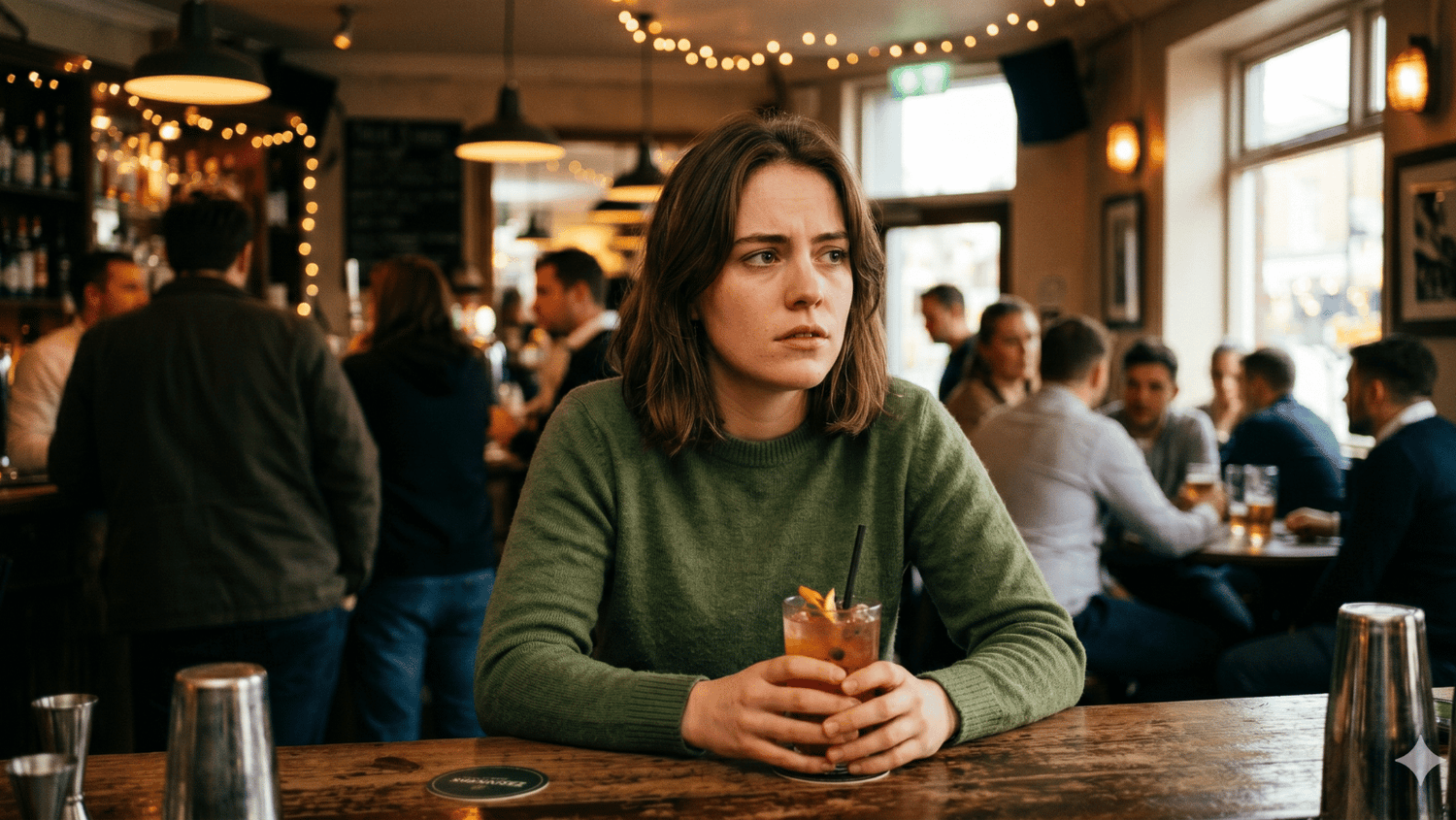
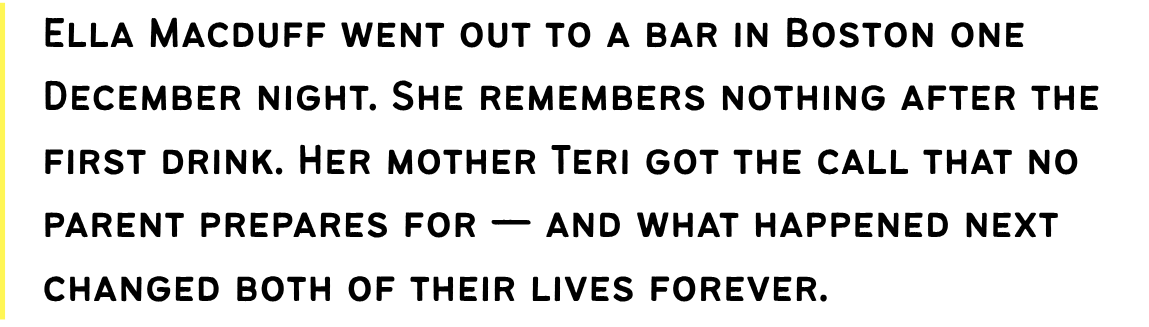

It was December 2022. Ella Macduff, a college student from Needham, Massachusetts, went out to a bar in Boston with friends. She had one drink.
She doesn't remember anything after that.
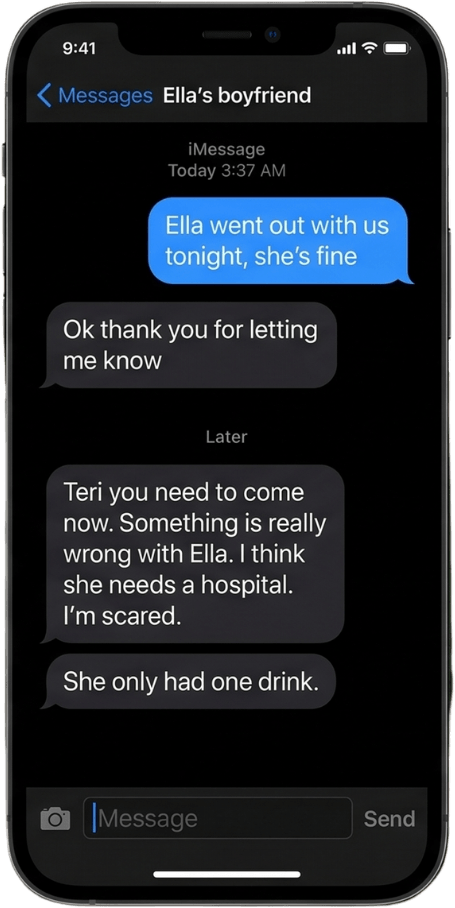
At some point that night, Ella's ex-boyfriend called her mother, Teri, in a panic. He said he needed to get Ella to a hospital — that he thought she was dying.
Teri rushed to meet them.
Teri's phone — December 2022
At the emergency room, Ella had a seizure. She became so agitated that doctors had to sedate her — and restrain her hands and legs to the hospital bed. Hours later, she was admitted to the intensive care unit after developing serotonin syndrome, a dangerous condition that occurs when too many drugs flood the body's system at once.
Teri knew immediately what had happened. She turned to the doctor and said: "I need a toxicology test."
The doctor looked at her daughter — unconscious, restrained, in the ICU — and told Teri that Ella was "just drunk" and needed to sleep it off.
They were denied the test.

By the time doctors reconsidered, it was too late. Many of the drugs used in drink spiking — Rohypnol, GHB, Ketamine — leave the body within 12 to 72 hours. The evidence was gone. There would be no investigation. No accountability.
"I didn't cope with what happened for over a year," Ella has said publicly. "It took me a very long time to process and understand that when you are drugged, it is not your fault. This is happening to you. Somebody is doing this to you."
1 in 13
college students report their drink being tampered with
72 hrs
or less before drink spiking drugs leave the body undetected
82%
of victims knew the person responsible
2 min
average time a drink is unattended before tampering occurs
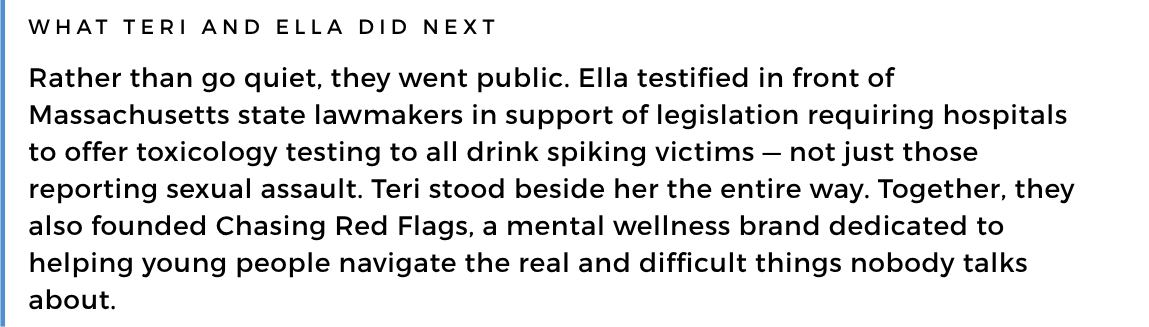

After everything they went through, Teri and Ella became advocates for a product they wish had been in Ella's hands on that December night in Boston.
It's called NightCap. It was invented by Shirah Benarde, a college student who experienced drink spiking herself and refused to accept that there was nothing a woman could do to protect herself. The concept is simple: a fabric cover worn as a scrunchie on the wrist that stretches over any cup or glass when it's set down — sealing the drink, with a built-in straw hole so she never has to remove it to drink.
It looks like something she already wears. Nobody notices it. It works exactly when it matters.
"This is the thing I would have put in Ella's hand before she walked out the door," Teri has said. "It doesn't replace the conversation. But it's the one physical thing she could have had that night that might have changed everything."
NightCap has sold over one million units and has been featured on the Today Show, ABC News, and People Magazine.
It was also featured on ABC’s Shark Tank, where the founders secured a deal with Lori Greiner — bringing it to a national audience.
And here’s what surprises most parents: it costs under $12 per cap when bought in a bundle.
Less than the drink it’s designed to protect.
AS SEEN ON SHARK TANK
Get the Bundle — One for Every Bag She Carries
One for her purse. One for her gym bag. One for her dorm room. One for her car. When it's everywhere, she uses it every time she goes out. That's how it works.
This is a sponsored advertorial produced in partnership with NightCap. Teri and Ella Macduff's story is shared with their explicit written permission. Ella Macduff's account has been reported publicly by FOX 17 News, Boston 25 News, and in Massachusetts state legislative testimony. NightCap is a protective deterrent — not a guarantee against drink tampering. © Family Safety Today
See the NightCap bundle — starting at $46. One for every bag she carries.